41Cga7oxcaS._AC_.jpg

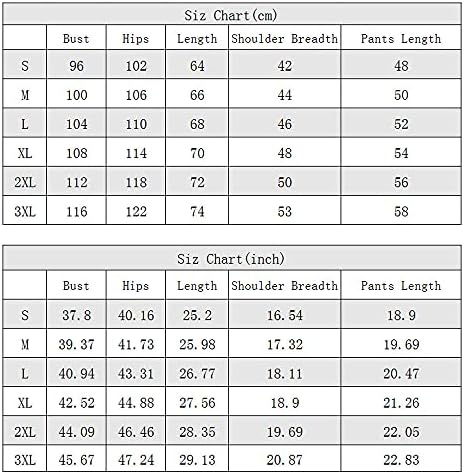
Men’s 2-Piece Sportswear Tracksuit Jogging Suit Sportswear and Fitness Sportswear


Price: [price_with_discount]
(as of [price_update_date] – Details)


[ad_1] Men’s 2-Piece Sportswear Tracksuit Jogging Suit Sportswear and Fitness Sportswear
Package Dimensions ‏ : ‎ 13.5 x 9.53 x 1.5 inches; 14.07 Ounces
Item model number ‏ : ‎ Universal
Department ‏ : ‎ Mens
Date First Available ‏ : ‎ January 4, 2022
ASIN ‏ : ‎ B09PN9R4CX

import
Drawstring closure
Fabric: high-quality, comfortable, breathable, quick-drying, shrink-proof/breathable/lightweight/moisture wicking
Style: sportswear suit/2 piece suit/short sleeves plus shorts, not only functional sportswear, but also a good companion for casual fashion
Occasion: sports/exercise/beach surfing/running/jogging/tennis/leisure, various sports and exercises
Men’s sports casual wear: Men’s casual wear, including comfortable sportswear, sweatshirt tops and jogging pants. Men’s sportswear suits, track suits and everyday casual wear.
Men’s short-sleeved T-shirt and shorts suit Tracksuits 2-piece Tracksuits, please refer to our size chart before placing an order

[ad_2]

Investing in Rental Real Estate

[ad_1]

It’s interesting how rental real estate gets treated as an investment. Like Rodney Dangerfield, it gets no respect. While conventional investments like stocks and bonds get the Financial Post and the Wall Street Journal, do a search on “how to purchase real estate” and you’ll discover all kinds of no-money down schemes that seem designed to sell books and tapes instead of investment real estate. On TV there is Report on Business TV, but for real estate you’ll see flipping shows or infomercials. It strikes me as pitiful that such a solid investment vehicle gets such a bad reputation.

It is possible to buy with no money down, but it involves arranging a high ratio mortgage, and for rental property you only do that if you have equity in other properties. In other words, if you’ve got one property free and clear its relatively easy to arrange a line of credit at prime. A $100,000 property would cost about $400 per month, plus taxes and maintenance of about $200. In short, it would carry itself and give you income to pay the financing costs.

A more common method to buy income real estate is with a deposit. Usually is you can make investment property itself with less than 40% down its probably a good deal. These kinds of properties are easier to come across in stable markets.

There are lots of reasons to own investment real estate.

Reason #1 to own income real estate is because your renters buy it for you. Even if the other benefits didn’t accrue, that on it’s own justifies the investment. But the fact is, there are more benefits to buying rental property

Reason #2 is leverage. The most effective description of how leverage works comes from the book Buy, Rent, Sell, by Lionel Needleman (Needleman is not a fast talker; in fact, he’s an accomplished author and professor with many published books and articles on housing in Great Britain and Canada. His assumptions and math is a bit simplistic, and need to be tweaked for your local market, but the book is worth looking at).

He explains leverage in the following manner: John and Mary each buy a property $100,000. After a year both houses have increased 10% in value. Both buyers sell the properties and compare the profits.

John began with $100,000, and now has $110,000, which means he has earned a 10% return on his investment. Mary, on the other hand, put $10,000 down on her property, and mortgaged the balance for$90,000. When she sells she clears off the mortgage and totals everything. She also received a $10,000 profit, but since she only invested $10,000 in the income property, she’s made a 100% return on her down payment. As you may suspect, the real kicker is that while John invested in one house, kept it for a year and then sold it with a $10,000 profit, Mary acquired 10 houses, kept them one year, and then sold them for a $100,000 profit. Both started out with $100,000, but after a year John has only got $110,000 while Mary $90,000 more. The numbers are simplified in this example, but they decisively demonstrate the magic of leverage.

Reason #3 is taxes. In most tax zones costs incurred on investment real estate is comes off income. And, you can generally incur depreciation expense on the structure that in effect are paper losses that reduce the tax burden. Depreciation works like this: we know that the value of a durable item, like a structure, decreases with the years. Even if the property is maintained perfectly, an old house is not worth the same amount of money as a new house. This loss is depreciation, and you can use that depreciation loss to decrease the total tax payable.

Of course, when we invest in income property we expect that it will go up in price, and over the long run it often does. What occurs with the depreciation in that case? The tax collector was told the property fell in price through depreciation, but at the end of the process we sold at a profit. The taxman usually says that you’ve “re-captured” the depreciation and levy tax.

Re-capture is no fun. It’s like discovering that you’ve already spent the money that you intended on spending in the future.

There is a great solution. When you buy the investment you cut up the original investment between the building value and the property value. Without cheating you set the value of the land as low as possible and the structure as high as reasonable (do the math and you’ll see it pays to be reasonable on your splits). When the property goes up in price and you liquidate, you tell the taxman that you didn’t recapture any depreciation since the structure did depreciate, while the land increased in value. This profit is capital gain, and capital gain is usually taxed at lower rates than income like…rent. You depreciate the money you make when you earn it as rent, and pay tax on it when it comes from capital gain.

Owning income producing property also enables you to write off the costs of things that you might have bought anyway, from office supplies to a trip to see the property.

Reason #4 is capital gain. Capital gain doesn’t always happen, but it often does. As we’ve seen with leverage, the capital gain can be leveraged. Even better, the capital gain can, sometimes, be greater than what some folks earn in a year of work.

Reason #5 puts everything together by combining cash flow, leverage, and tax planning. Rental real estate generate cash flow. Initially the cash flow could be neutral or even negative, but after some time it will often becomes positive. When it does you need to pay income tax on the excess rent. The solution for that is to re-mortgage and incur additional interest cost, reducing your taxes. You also re-leverage your initial property. The next step is to take that money and buy another income property. You pay no income tax, incur more depreciation, and still earn a capital gain. Better yet, with two properties you spread the risk, and when the time comes to sell you can stretch out the timeline and sell the properties in different years to minimize tax.

It can’t be repeated enough that you need to buy income property wisely. You need to know the location and the potential tenant. Properties that are desirable and are in a desirable area stay rented. “Desirable” doesn’t have to be “mansion”, but warm, clean, dry and well priced are critical. Whether you buy a 1 bedroom apartment or a three bedroom house with a suite isn’t important.

Metrics are critical. The first is price-to-rent ratio. What that means is that you take the price, say $100,000, and divide the rent, say $1000/month, into that. In this case the result would be 100. Numbers between 75 and 175 are great, but never forget that projected capital gains and interest rates impact what numbers you go with. Low interest rates permit higher numbers, and solid capital gain projections will demand higher numbers. Over 200 is no good in almost every location unless all you need is dependable income, aren’t concerned about capital gain or don’t ever plan to sell.

Another excellent metric is the break even rate. This is the percentage of the price need for a down payment to allow the realistic rent to carry the property. The rent has to be a) market rent, not “hoped for” rent, and b) net rent, not gross rent. If the investment will carry at less than 45% down its worth looking at. Clearly, if interest rates are low the net rent will carry more, meaning the break even rate can be high. Remember that low rates don’t last forever, so unless you can lock in very long term you have to assume that the break even rate to be low in low interest rate environments, and can be higher in higher interest rate environments.

If you discover a piece of property that has a desirable price to rent ratio and a desirable break even rate (and is in a good area and isn’t a bad idea), its worth throwing the numbers onto a spreadsheet and determining the internal rate of return (a real estate investment metric that combines various income streams) and projected cash on sale. There are spreadsheets and programs that can calculate this for you, but the key is “GIGO” – garbage in, garbage out. Use correct taxes, the correct interest rates, your projections of income tax rate, and realistic estimates of capital gain and maintenance. Properties in bustling urban areas generally go up in value more than properties in rural or depressed locales. They also often have what seem to be inferior metrics – a downtown city condo could have a much worse price to rent and break even point than small house in a mill town. However, capital appreciation in a rural area is likely much riskier. Measuring mortgage pay down and tax benefits on a detailed spreadsheet let’s you fairly evaluate exactly how competing investments compare.

It would be foolish to ignore the issue of a property bubble, or crash. Buying on metrics both helps and hinders. It helps because if you are hard-nosed with break even rates and rent multipliers you wouldn’t purchase overpriced investment property (underpriced income property doesn’t really turn up in a bubble, and it doesn’t crash in value). It hinders because you can’t buy on metrics in a bubble, no matter how much you want to, because metric compliant properties don’t exist.

The other side of this is that when a market crashes there are lots of metric compliant properties, but often little mortgage financing and plenty of scared buyers and stressed sellers.

All in all, a balanced market is the optimum for purchasers, although buyers who acquire on metrics and exit the market near the peak often feel like they’ve hit the jackpot.

[ad_2]
Source by Rob Chipman

31ngN9NPv7L._AC_.jpg

Dickies mens Tough Max Duck Carpenter Pants, Stonewashed Brown Duck, 34W x 32L US


Price: [price_with_discount]
(as of [price_update_date] – Details)


[ad_1] Dickies flex with performance fabrics are two times stronger and longer lasting than all-cotton fabric. Made with specialized polyester wrapped yarns, these high performance fabrics offer superior flexibility, exceptional abrasion resistance and enhanced durability.
Is Discontinued By Manufacturer ‏ : ‎ No
Product Dimensions ‏ : ‎ 13 x 8 x 1 inches; 1.32 Pounds
Item model number ‏ : ‎ DP802SBD 34 32
Department ‏ : ‎ Mens
Date First Available ‏ : ‎ April 10, 2017
Manufacturer ‏ : ‎ Dickies Men’s Sportswear
ASIN ‏ : ‎ B06Y4XCS8M

Imported
Machine Wash
Flex fabric for ease of movement and comfort, designed to move
Tough max technology for exceptional performance
Utility loop and dual tool pockets
Modern work fit, sit slightly below the waist
Reinforcement throughout the garment

[ad_2]

Essential Real Estate Agent Qualities: Integrity, And Fiduciary Responsibilities

[ad_1]

In many areas/ regions of this country, a homeowner, has many choices, in terms of selecting, the right, real estate agent, to serve his best interests, etc. Obviously, since for most of us, our house represents our single – largest financial asset, and this decision, may have a strong impact, on the potential results, one should take this process, extremely seriously, and take the time, and effort, to ensure, selecting the best representation, for your purposes. While, it might be possible, to effectively, train, and develop, agents, so they learn the necessary skills, etc, and, a motivated individual, via a combination of skills, and developed judgment/ wisdom, one’s basic quality of character, must be strongly considered, because while anyone might be able to handle the other needed actions, etc, only the rare person, will maintain absolute integrity, especially when an easier path, might be available. This must also include, that individually, seriously commit, to their legal and ethical responsibility, and duty, to honor, and protect, his client’s fiduciary privacy, etc. With that in mind, this article will attempt to briefly, consider, review, and discuss, some of what, this encompasses.

1. What are some of an agent’s fiduciary responsibilities?: Real estate agents, are, legally and ethically, bound, to honor and protect, his client’s financial information, and anything, which might affect, and impact, their potential results! For example, while the homeowner, might have personal reasons, which might direct him, towards needing to sell his house, such as financial reversals, etc, letting potential home buyers, know these, might result in these individuals, seeking better terms, including lower offers, etc. In addition, for example, if, your client, has already committed to purchasing a new home, and selling the existing one, is needed, for completing that transaction, disclosing this confidential information, potentially, might be detrimental to your client. Since real estate agents, get paid on a commission – basis, and only are compensated, after a successful transaction, some might be tempted to take some short – cuts, and might disclose certain information, believing it may, create offers. Understand, doing so, is neither legal or ethical, but, the reality is, it is sometimes, done, anyway!

2. Integrity and disclosure: One must balance their allegiance to their client, with their legal obligation, to disclose any material issues/ faults, which might affect any potential buyer! No one should proceed, with anything less than absolute integrity, while balancing this, with the duties and responsibilities, he owes, to his client.

Carefully select the real estate agent, you will hire, based on many factors, but, listen carefully, and closely examine, the individual’s essential quality of character! You owe it, to yourself, to receive the finest representation!

[ad_2]
Source by Richard Brody

41N1AuWW3BL._AC_.jpg

Lucky Brand Women’s Knotted and Draped Top


Price: [price_with_discount]
(as of [price_update_date] – Details)


[ad_1] Lucky Brand women’s 3/4 sleeve knotted and draped top
Package Dimensions ‏ : ‎ 14.25 x 12.6 x 1.38 inches; 13.93 Ounces
Item model number ‏ : ‎ 7WD10759
Department ‏ : ‎ Womens
Date First Available ‏ : ‎ May 23, 2018
Manufacturer ‏ : ‎ Lucky Brand
ASIN ‏ : ‎ B079NKFWMP

Imported
No Closure closure
Machine Wash
Front self tie closure
Tonal stitch detail

[ad_2]

4 Options To Purchase Investment Real Estate Purchases

[ad_1]

When, someone, decides, he’s ready, and prepared, to invest in real estate, for investment purposes, he must do his homework, and know/ understand, his options, in terms of investing in these types of properties. While investment real estate, often, is a superb investment, this is only the case, when the property is the correct one, and a well – considered, evaluation is done, and one is properly prepared, to consider the best way, to fund these purchases. The process must begin with, doing a thorough, financial analysis, and feasibility study, to consider, revenue flow, costs/ expenditures, and, whether, the purchase, makes sense. Once, this is carefully done and performed, one must consider, how he will fund the transaction. With that in mind, this article will attempt to, briefly, consider, examine, review, and discuss, 4 possible options, to fund commercial real estate purchases.

1. Conventional loans: Begin your analysis, and review, by considering conventional loans, and whether, this way, makes sense, for you, and your needs/ requirements! A conventional/ traditional loan, generally offered, by a bank, or other lending institution, requires significant collateral, and other assurances, to qualify. It also requires a down – payment, often, approximately, 25%. One’s overall, credit rating, must be, at a level, which will generate the finest offers, etc.

2. Get funds from contacts/ investors, etc: Sometimes, the best course, is to seek partners, or shareholders, in order to get the necessary funding. Doing so, often, reduces your personal risk, but, also limits the upper – end, possibility! In addition, it requires, putting together, a legally, drawn – up, agreement, etc. This is often, attractive, when one doesn’t have the personal funds, or can’t put together, the necessary, down – payment.

3. Combination: Sometimes, the best course of action, for someone, may be using some sort of combination, of the two methods, listed above. Perhaps, using a conventional approach, for much of the funding, and attracting investors, to, either minimize risk, or create the ability to have the necessary degree of reserves, associated with managing these types of properties, might makes sense, to some.

4. Partnership; limited partnership; corporation; Real Estate Investment Trust (REIT): If you don’t want to, or are unable to do this, on your own, a partnership, limited partnership, or corporation, might make the most sense. However, if you aren’t prepared for quality analysis of choosing the right property, or would rather, be more diversified, a Real Estate Investment Property (or, REIT), might make sense, because, if you select, the right, General Partner, and experienced, expert advisers, you will be able to invest in real estate, in a similar manner, to investing in a Mutual Fund.

If you want to invest in investment real estate, do so, wisely, and be prepared, for making the wisest, possible decisions! Understanding, financing options, etc, positions you, to make the best decision, for you!

[ad_2]
Source by Richard Brody

31bYE9Yv2eL._AC_.jpg

Daily Ritual Women’s Sandwashed Modal Blend High-Low Sweatshirt


Price: [price_with_discount]
(as of [price_update_date] – Details)


[ad_1] An Amazon brand – Simple but stylish, this high-low sweatshirt features a crew neckline, raglan sleeves, and elasticized cuffs and hem
Package Dimensions ‏ : ‎ 12.36 x 10.87 x 0.87 inches; 9.17 Ounces
Item model number ‏ : ‎ DR18114760
Department ‏ : ‎ Womens
Date First Available ‏ : ‎ May 18, 2020
Manufacturer ‏ : ‎ Daily Ritual
ASIN ‏ : ‎ B07YCQZRJL

Imported
No Closure closure
Machine Wash
Simple but stylish, this high-low sweatshirt features a crew neckline, raglan sleeves, and elasticized cuffs and hem
Sandwashed Modal drapes luxuriously with a sumptuously soft sueded handfeel
Model is 5’10” and wearing a size S

[ad_2]

Real Estate Property Investment Series: Focus Ghana 2007

[ad_1]

Ghana’s property market is a direct reflection of the state of the West African nation itself in that it is emerging, developing, has immense potential but is restricted by serious fundamental issues relating to issues such as poor land title registration transparency and lack of affordable home financing solutions locally.

The best approach to take with Ghana is to line up all the negatives, knock them down with proof that the government and additional external bodies and agencies are tackling these issues head on and then identify the amazing potential available in Ghana for property investors from 2007 onwards…in this way an investor can determine whether 2007 is the year for them to begin their due diligence in Ghana for long term capital appreciating investment opportunities.

Current Issues Facing Ghana’s Property Market

The current issues facing Ghana’s property market include the fact that those buying resale land and property often buy litigation rather than land title because there is no decent system in place for the registration of title deeds and transfers and because the conveyancing system lacks transparency.

In addition to this the level of tourism growth in Ghana is not sufficient for the tourism economy to become an attractive sector for foreign direct investment at the moment. Furthermore there are problems in the main cities with homelessness and even those with a desire to own their own homes and who have a decent salary with which to afford a home loan have limited and restricted access to mortgages in Ghana.

Efforts Underway to Improve the Real Estate Marketplace in Ghana

The current government in Ghana inherited the situation as detailed above but are 100% focused on changing these issues and developing a nation of middle income home owners. To that end they have started numerous programs and schemes such as a program to attract greater foreign direct investment. The government is also working in partnership with the likes of Canada Mortgage and Housing Corporation and Development International Desjardins to develop regulatory reforms in the mortgage market and they have brought American based Broad Cove Partners Inc in which is an emerging market financial advisory firm and which is now developing a new USD 30 million long term property finance facility to assist with affordable housing and mortgage finance in Ghana.

In 2007 a new program to register every house on every street in Ghana will get underway to begin solving the land title issues and on the tourism side of things the Ghana Tourist Board has been active under the Acting Executive Director Martin Mireku. So far Mr. Mireku has brought Delta Airlines and North American Airlines to Ghana with multiple direct flights between Accra (the capital of Ghana) and the likes of New York every week and there is a strong campaign underway for these airlines and other international tourism representatives with interests in Ghana to promote the attractiveness and potential of the nation to the wider world.

A property investor looking at whether Ghana is a viable option for portfolio expansion purposes needs to understand that every issue that exists to restrict the attractiveness of the property market in Ghana is being addressed by the government or external agencies and that this proves their intense commitment to the improvement of their nation, the boosting of their economy, the raising of living standards of its people and the establishment of a sustainable source of foreign direct investment into the likes of tourism and real estate.

The Tourism Potential in Ghana

Tourism in Ghana currently contributes up to 8.5% of GDP and employs around 6.9% of the entire nation’s workforce; going forward it is predicted that the travel and tourism sector will grow by about 4.9 – 5% annually from 2007, but for the Ghanaian government that is not enough. In a bid to raise the profile of the country they have brought in international airlines as stated, they have also liberalised their aviation policy as a result and ongoing they are determined that this sector will boost the economy in a sustainable way over the long term.

An investor needs to understand that when tourism comes in earnest to Ghana there will be multiple layers of opportunity because it is a nation rich in natural wonders, delights and beauty from untouched and pristine beaches to an interior full of exotic and amazing wildlife in abundance, and there are just not the facilities for international travellers to experience and enjoy such delights safely and in comfort.

This represents huge investment opportunity…

Local Affordable Housing

The other area an investor can examine from 2007 onwards is the issue of the supply of affordable housing to Ghanaians. In recent years there has been a trend of rural to urban flow of migration and the trouble with this flow is that it has been strong and is sustained and there is just not enough housing to accommodate all those arriving and looking for work. As a result there is a homelessness problem developing in some of the more densely populated areas of the country and those with property assets available to let have been exploiting those requiring housing and demanding up to 3 years rent in advance.

In a bid to solve this problem the government has announced incentives for constructors to build affordable local housing starting in 2007 – and for the next five years as part of the National Housing Programme 20,000 new homes will be built in Ghana annually. Naturally enough investment in this sector is still required and those with a social conscience who want to actively participate in something that will return them a profit whilst benefiting a nation restricted by poverty should look at how they can get involved.

In conclusion, while there are true emerging market problems affecting the property market and the investment potential from real estate in Ghana at the moment, everything is being done that can be done to positively address and solve these problems. The most important factor to keep in mind therefore is that Ghana knows it has potential and is doing all it can to achieve this potential…and an investor seeking massive opportunity, low start up costs and huge long term potential for growth could well find that 2007 is the year for them to explore Ghana.

[ad_2]
Source by Rhiannon Williamson

41a-13x2UsL._AC_.jpg

Neleus Women’s 3 Pack Compression Base Layer Dry Fit Tank Top


Price: [price_with_discount]
(as of [price_update_date] – Details)


[ad_1] Neleus was born in 2008 ,with its unique design concept, excellent quality and comfortable clipping, has gain the crazy love from the clients.
As the most energetic brand, Neleus is committed to provide the most innovative and price-friendly sport goods.
Technological quality is the priority of the company’s products.


Is Discontinued By Manufacturer ‏ : ‎ No
Package Dimensions ‏ : ‎ 9.49 x 7.2 x 0.71 inches; 8.01 Ounces
Item model number ‏ : ‎ NT0004B+H+LS
Department ‏ : ‎ Womens
Date First Available ‏ : ‎ June 8, 2017
ASIN ‏ : ‎ B072MM7MSV

Pull On closure
Ignore the “Size Chart” provided by amazon,check the size chart of the third picture to select the appropriate size
So easy to move while practicing Ashtanga,and does not matter how much you sweat
Stretchy fabric helps move without restrictions for a comfortable fit
Perfect option during various indoor activities and outdoor excursion,such like:yoga,sports,running,cross training and etc
Soft, breathable and moisture-wicking fabrics keep you dry and comfortable

[ad_2]

Calculus Applications in Real Estate Development

[ad_1]

Calculus has many real world uses and applications in the physical sciences, computer science, economics, business, and medicine. I will briefly touch upon some of these uses and applications in the real estate industry.

Let’s start by using some examples of calculus in speculative real estate development (i.e.: new home construction). Logically, a new home builder wants to turn a profit after the completion of each home in a new home community. This builder will also need to be able to maintain (hopefully) a positive cash flow during the construction process of each home, or each phase of home development. There are many factors that go into calculating a profit. For example, we already know the formula for profit is: P = R – C, which is, the profit (P) is equal to the revenue (R) minus the cost (C). Although this primary formula is very simple, there are many variables that can factor in to this formula. For example, under cost (C), there are many different variables of cost, such as the cost of building materials, costs of labor, holding costs of real estate before purchase, utility costs, and insurance premium costs during the construction phase. These are a few of the many costs to factor in to the above mentioned formula. Under revenue (R), one could include variables such as the base selling price of the home, additional upgrades or add-ons to the home (security system, surround sound system, granite countertops, etc). Just plugging in all of these different variables in and of itself can be a daunting task. However, this becomes further complicated if the rate of change is not linear, requiring us to adjust our calculations because the rate of change of one or all of these variables is in the shape of a curve (i.e.: exponential rate of change)? This is one area where calculus comes into play.

Let’s say, last month we sold 50 homes with an average selling price of $500,000. Not taking other factors into consideration, our revenue (R) is price ($500,000) times x (50 homes sold) which equal $25,000,000. Let’s consider that the total cost to build all 50 homes was $23,500,000; therefore the profit (P) is 25,000,000 – $23,500,000 which equals $1,500,000. Now, knowing these figures, your boss has asked you to maximize profits for following month. How do you do this? What price can you set?

As a simple example of this, let’s first calculate the marginal profit in terms of x of building a home in a new residential community. We know that revenue (R) is equal to the demand equation (p) times the units sold (x). We write the equation as

R = px.

Suppose we have determined that the demand equation for selling a home in this community is

p = $1,000,000 – x/10.

At $1,000,000 you know you will not sell any homes. Now, the cost equation (C) is

$300,000 + $18,000x ($175,000 in fixed materials costs and $10,000 per house sold + $125,000 in fixed labor costs and $8,000 per house).

From this we can calculate the marginal profit in terms of x (units sold), then use the marginal profit to calculate the price we should charge to maximize profits. So, the revenue is

R = px = ($1,000,000 – x/10) * (x) = $1,000,000xx^2/10.

Therefore, the profit is

P = R – C = ($1,000,000xx^2/10) – ($300,000 + $18,000x) = 982,000x – (x^2/10) – $300,000.

From this we can calculate the marginal profit by taking the derivative of the profit

dP/dx = 982,000 – (x/5)

To calculate the maximum profit, we set the marginal profit equal to zero and solve

982,000 – (x/5) = 0

x = 4910000.

We plug x back into the demand function and get the following:

p = $1,000,000 – (4910000)/10 = $509,000.

So, the price we should set to gain the maximum profit for each house we sell should be $509,000. The following month you sell 50 more homes with the new pricing structure, and net a profit increase of $450,000 from the previous month. Great job!

Now, for the next month your boss asks you, the community developer, to find a way to cut costs on home construction. From before you know that the cost equation (C) was:

$300,000 + $18,000x ($175,000 in fixed materials costs and $10,000 per house sold + $125,000 in fixed labor costs and $8,000 per house).

After, shrewd negotiations with your building suppliers, you were able to reduce the fixed materials costs down to $150,000 and $9,000 per house, and lower your labor costs to $110,000 and $7,000 per house. As a result your cost equation (C) has changed to

C = $260,000 + $16,000x.

Because of these changes, you will need to recalculate the base profit

P = R – C = ($1,000,000xx^2/10) – ($260,000 + $16,000x) = 984,000x – (x^2/10) – $260,000.

From this we can calculate the new marginal profit by taking the derivative of the new profit calculated

dP/dx = 984,000 – (x/5).

To calculate the maximum profit, we set the marginal profit equal to zero and solve

984,000 – (x/5) = 0

x = 4920000.

We plug x back into the demand function and get the following:

p = $1,000,000 – (4920000)/10 = $508,000.

So, the price we should set to gain the new maximum profit for each house we sell should be $508,000. Now, even though we lower the selling price from $509,000 to $508,000, and we still sell 50 units like the previous two months, our profit has still increased because we cut costs to the tune of $140,000. We can find this out by calculating the difference between the first P = R – C and the second P = R – C which contains the new cost equation.

1st P = R – C = ($1,000,000xx^2/10) – ($300,000 + $18,000x) = 982,000x – (x^2/10) – $300,000 = 48,799,750

2nd P = R – C = ($1,000,000xx^2/10) – ($260,000 + $16,000x) = 984,000x – (x^2/10) – $260,000 = 48,939,750

Taking the second profit minus the first profit, you can see a difference (increase) of $140,000 in profit. So, by cutting costs on home construction, you are able to make the company even more profitable.

Let’s recap. By simply applying the demand function, marginal profit, and maximum profit from calculus, and nothing else, you were able to help your company increase its monthly profit from the ABC Home Community project by hundreds of thousands of dollars. By a little negotiation with your building suppliers and labor leaders, you were able to lower your costs, and by a simple readjustment of the cost equation (C), you could quickly see that by cutting costs, you increased profits yet again, even after adjusting your maximum profit by lowering your selling price by $1,000 per unit. This is an example of the wonder of calculus when applied to real world problems.

[ad_2]
Source by Michael Frick